

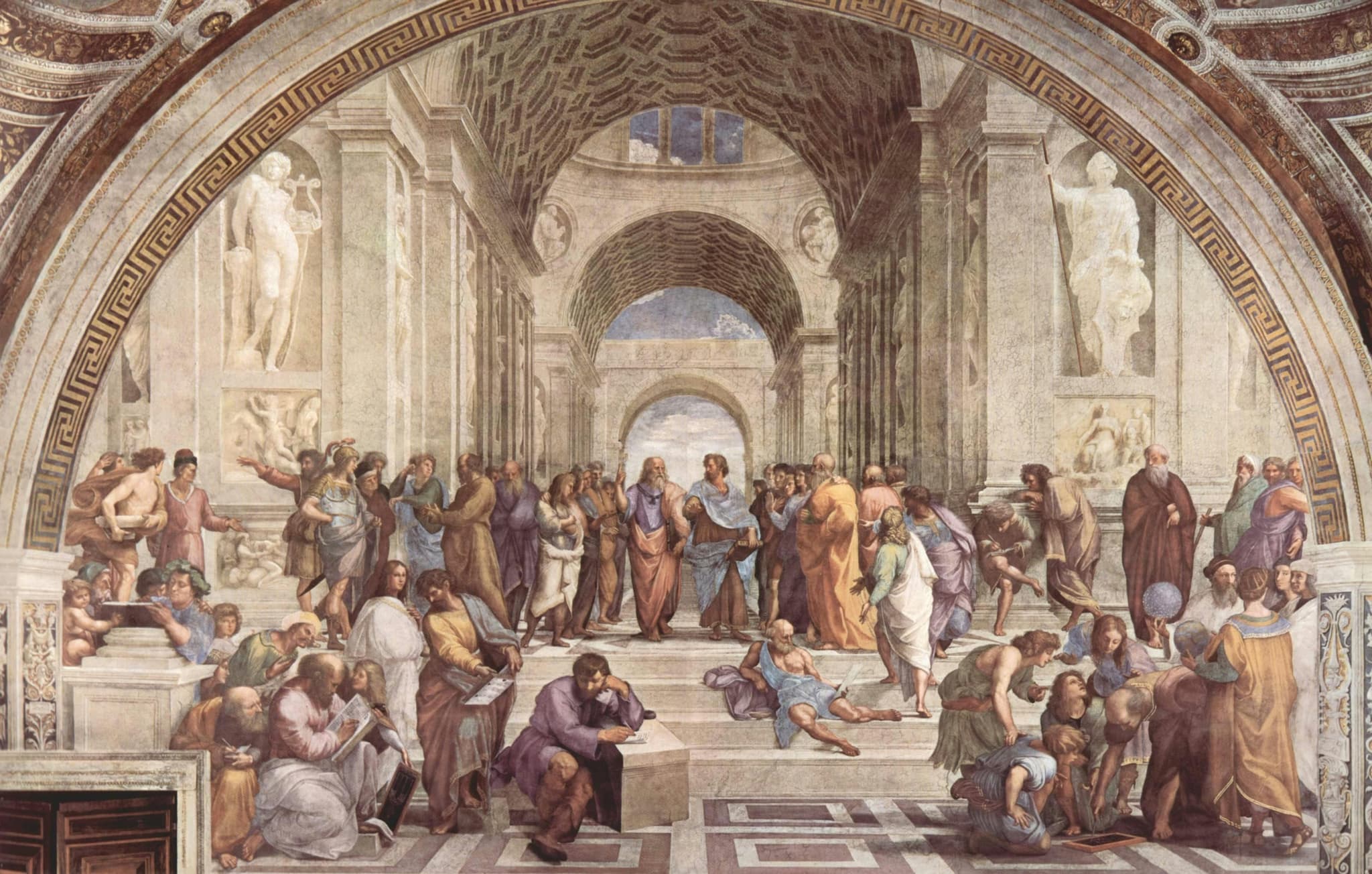
Aristotle and the Golden Mean: Philosophy and Where to Start

Jack is a writer for schrodingers.cat. He holds a DPhil in Philosophy from the University of Oxford and has taught critical thinking and argument mapping at the LSE and in prison education programmes. He's obsessed with making philosophy legible and fun—and still thinks the best argument is the one that changes someone's mind over a pint. (He has been told this is "very British.") (Our bylines are fictional—like the cat in the box. No authors or cats were harmed. See our About page.)
Our blog authors are fictional—a thought experiment in multiple voices. Why we do this →
Key points
Aristotle’s golden mean in plain language: what it is, how it works in ethics, and where to read more. A friendly intro to one of philosophy’s most enduring ideas.
Aristotle the golden mean philosophy is one of the most searched-for ideas in philosophy—and for good reason. The golden mean is easy to state but rich to unpack: virtue sits between two extremes, like courage between recklessness and cowardice. If you’ve ever wondered what Aristotle’s golden mean actually means and why it still matters, this article is for you.
What is the golden mean? In short: for Aristotle, a virtue is a stable disposition to feel and act in the right way, and “the right way” is often a middle between two vices—too much and too little. Aristotle the golden mean philosophy isn’t “everything in moderation” in a vague sense; it’s a structured way of thinking about character and action. You don’t need Greek to get the gist; you need a few examples and a willingness to think about where the mean lies.
Below: what Aristotle’s golden mean is, how it works in ethics, a few examples, what critics say, and where to go deeper with learning paths and ethics on schrodingers.cat.
What is Aristotle’s golden mean?
For Aristotle, ethics is about character—the kind of person you become—and character is shaped by habits. Virtues are excellences of character: they’re the dispositions that help us live well. The golden mean (sometimes “the mean”) is his idea that many virtues lie between two extremes. Courage, for example, is a mean between recklessness (too much confidence in the face of danger) and cowardice (too much fear). Neither “feel nothing” nor “panic” is the goal; the goal is to feel and act appropriately.
So Aristotle the golden mean philosophy isn’t “be average.” It’s “find the right amount for this situation.” The mean is relative to us and to the context—what’s courageous for one person or in one situation might be reckless or cowardly in another. That’s why Aristotle spends so much time on practical wisdom (phronēsis): you need judgment to see where the mean lies. For more on how Aristotle thinks about character and action, an introduction to ethics or a path on ethics is a good next step.
How the golden mean works: a few examples
Courage. Too little fear in the face of danger is recklessness; too much is cowardice. Courage is the mean: you feel fear but you act rightly anyway when it’s appropriate.
Generosity. Too little giving is stinginess; too much (giving away what you need to live, or giving to the wrong people for the wrong reasons) is wastefulness or foolishness. Generosity is the mean: you give appropriately, to the right people, in the right way.
Confidence. Too little confidence in yourself is undue humility or self-deprecation; too much is arrogance. The mean is a realistic sense of your abilities and limits.
Anger. Too little anger when you’re wronged might be indifference or lack of self-respect; too much is rage or spite. The mean is feeling anger when it’s fitting and expressing it in a proportionate way.
In each case, Aristotle’s golden mean is not a formula—it’s a way of looking at virtue. The “middle” isn’t always arithmetic; it’s the right response for the situation. Many philosophers (and ordinary people) still find this a useful way to think about character. Others think it’s too vague or that it doesn’t capture all of ethics. Both views are worth taking seriously.
Why Aristotle’s golden mean still matters
Aristotle the golden mean philosophy still matters because we still care about character. When we ask “Was that courageous or reckless?” or “Was that generous or wasteful?” we’re asking exactly the kind of question the golden mean is meant to clarify. It gives us a shared vocabulary: instead of trading intuitions, we can ask where the mean lies and what the extremes are.
It also connects to how we learn. Aristotle thought we become virtuous by doing virtuous things—by practicing. So the golden mean isn’t just a definition; it’s a guide for what to practice. That can feel encouraging: you don’t have to be perfect now; you’re building habits. If you want to go deeper, try a path on ethics or virtue on the philosophy map, or take the path quiz to get a suggestion.
Objections and nuance
Not everyone agrees with Aristotle. Some say the golden mean is too vague—how do we know where the mean is? Aristotle’s answer is practical wisdom, but that can feel circular. Others say some virtues don’t fit the pattern: is there really a “mean” for honesty or justice? Aristotle has answers (e.g. some vices don’t have a proper opposite; justice might be different in structure), but the debate is real.
From what I’ve seen, the golden mean works best as a lens—a way to ask “What’s the excess here? What’s the defect? What would the right amount look like?”—rather than as a calculator. It’s a starting point for reflection, not a final answer. For more on different approaches to ethics, see introduction to ethics.
Where to start with Aristotle
You don’t need to read the Nicomachean Ethics cover to cover to get value from Aristotle the golden mean philosophy. Start with the idea: pick one virtue (courage, generosity, honesty) and ask yourself what the two extremes are and where the mean might lie. Then try a learning path on ethics or ancient philosophy. The path quiz can suggest a path based on your interests. If you like Aristotle’s way of thinking about character, you might also enjoy philosophy questions about virtue and the good life.
Frequently Asked Questions
What is Aristotle’s golden mean in philosophy?
Aristotle’s golden mean in philosophy is the idea that many virtues are a middle between two vices—too much and too little. For example, courage is a mean between recklessness and cowardice. The mean isn’t “average”; it’s the right response for the situation, and finding it requires practical wisdom.
What is an example of the golden mean?
Courage is a classic example: too little fear in danger is recklessness; too much is cowardice; courage is feeling fear but acting rightly when it’s appropriate. Generosity is another: the mean between stinginess and wastefulness is giving appropriately—to the right people, in the right way, for the right reasons.
Why is Aristotle’s golden mean important?
Aristotle the golden mean philosophy is important because it gives us a way to think about character and virtue that’s still widely used. It suggests that becoming good is a matter of habit and practice, and that we can ask “What’s the excess? What’s the defect?” to reflect on our actions. It’s a starting point for ethical reflection, not a final formula.
Conclusion
Aristotle the golden mean philosophy is one of the most enduring ideas in ethics: virtue as a mean between extremes, found through practice and practical wisdom. You don’t need to master the Ethics to use it—pick a virtue, find the extremes, and ask where the mean lies. Then go deeper with learning paths and ethics on schrodingers.cat.
Summary. Aristotle’s golden mean says virtue is often a middle between two vices. It still matters for thinking about character and action. Start with one example (e.g. courage) or a path on ethics on schrodingers.cat.
Aristotle & ethics paths → · Introduction to ethics → · Path quiz →
Key takeaway: Aristotle’s golden mean: virtue is the right amount between two extremes. Use it as a lens for reflection—then explore ethics paths on schrodingers.cat.
Start learning philosophy for free
Guided paths, Socratic dialogues, and argument mapping—no signup required.
Browse learning pathsMore from the blog
Blog · Browse free philosophy learning paths · Join the forum · Argument Cartographer · Philosophy map