

Philosophy of the Ancient Greeks: What It Is and Where to Start

Lily is a writer for schrodingers.cat. She has an MA in Philosophy from UC Berkeley and spent a few years teaching logic and ethics before turning to writing. She cares most about making arguments visible—and once tried to map every argument in a single episode of a reality show. (She does not recommend it.) (Our bylines are fictional—like the cat in the box. No authors or cats were harmed. See our About page.)
Our blog authors are fictional—a thought experiment in multiple voices. Why we do this →
Key points
An intro to ancient Greek philosophy: pre-Socratics, Socrates, Plato, Aristotle, and Hellenistic schools. What the Greeks asked—and where to go deeper.
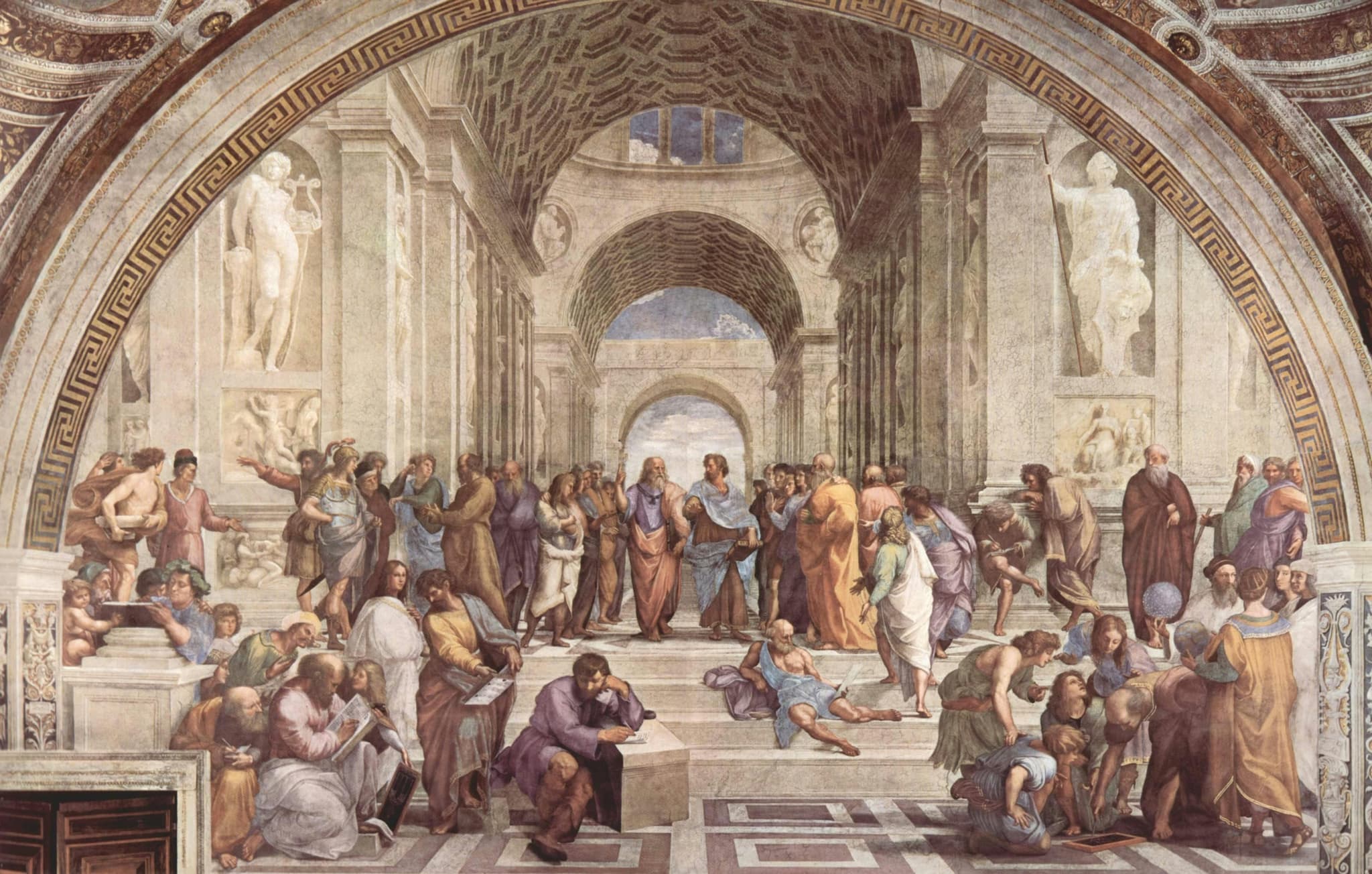
The philosophy of the ancient Greeks is where much of Western philosophy begins. From the first thinkers in Miletus to Socrates, Plato, Aristotle, and the Hellenistic schools, ancient Greek philosophy set the questions and methods that still shape how we think. If you’ve ever wondered what greek philosophy actually is—who the main figures were, what they asked, and why it matters—this article is for you.
What is ancient Greek philosophy? In short: the philosophy of ancient greeks is the tradition of rational inquiry that started in the Greek-speaking world around the sixth century BCE. It asked: What is the world made of? What is virtue? What is knowledge? How should we live? You don’t need Greek to get the gist; you need curiosity and a willingness to follow the argument.
Below: what ancient greek philosophy is, the main periods and figures (pre-Socratics, Socrates, Plato, Aristotle, Hellenistic), key ideas, why it still matters, and where to go deeper with learning paths, philosophy questions, and the philosophy map on schrodingers.cat.
What is the philosophy of the ancient Greeks?
The philosophy of the ancient greeks is the tradition of asking big questions with reasons—without relying only on myth or authority. It began in the sixth century BCE in Ionia (the coast of modern Turkey) and spread across the Greek-speaking Mediterranean. Ancient greek philosophy isn’t one doctrine; it’s a family of approaches: some focused on nature and the cosmos, others on ethics and the soul, others on logic and knowledge. What unites them is the turn to argument and the demand for reasons.
So greek philosophy in this sense is: the birth of Western philosophy as we know it—the idea that we can reason about reality, value, and knowledge, and that we should follow the argument where it leads. For a list of questions you can use yourself (many of them Greek in origin), see philosophy questions.
Pre-Socratics: the first philosophers
Before Socrates, ancient greek philosophy was mainly about nature (physis). The pre-Socratics asked: What is everything made of? What is the fundamental stuff of the world? Thales (c. 624–546 BCE) said water; Anaximenes said air; Heraclitus said change itself is fundamental; Parmenides said change is illusory and only being is real. They didn’t agree, but they started the project: explain the world by reason and principle, not by story alone.
So the philosophy of the ancient greeks begins with cosmology and metaphysics—questions about the basic structure of reality. If you like “what is the world made of?” you’re in pre-Socratic territory. For more on big questions about reality, see metaphysics for beginners or a path on metaphysics if you have one.
Socrates: the turn to ethics and the soul
Socrates (c. 470–399 BCE) shifted the focus. He didn’t write anything; we know him through Plato and others. He asked: What is virtue? What is justice? What is the good life? His method—questioning people who claimed to know, exposing contradictions, and arriving at acknowledged ignorance (aporia)—is the Socratic method. He thought the unexamined life is not worth living and that his only wisdom was knowing that he knew nothing.
So ancient greek philosophy after Socrates is deeply concerned with how we should live and how we can know. The philosophy of the ancient greeks from here on mixes ethics, epistemology, and politics. For more on asking questions the Socratic way, see Socratic method examples and Socratic dialogue on schrodingers.cat.
Plato: Forms, soul, and the ideal city
Plato (c. 428–348 BCE), Socrates’ student, founded the Academy in Athens. His greek philosophy centres on the theory of Forms: beyond the changing world we see, there are unchanging, perfect realities (Forms) that are the true objects of knowledge. The soul is immortal and can know these Forms; the just soul and the just city mirror each other. The Republic develops this with the allegory of the cave, the myth of Er, and the idea that philosophers should rule.
So ancient greek philosophy in Plato is metaphysics, epistemology, ethics, and politics in one package. If you want to go deeper, try a path on Plato or ethics, or see introduction to ethics.
Aristotle: logic, nature, virtue
Aristotle (384–322 BCE), Plato’s student, founded the Lyceum. His philosophy of the ancient greeks is vast: logic, metaphysics, physics, biology, ethics, politics, poetics. He thought we learn about the world by observing it and classifying it; he gave us the golden mean in ethics (virtue as a middle between extremes) and the idea that humans are “rational animals” who flourish when they live virtuously. For a friendly intro to one of his best-known ideas, see Aristotle and the golden mean.
So ancient greek philosophy in Aristotle is systematic: he tried to organize knowledge and to ground ethics and politics in human nature. If you like structure, start with Aristotle and the golden mean or a path on ethics.
Hellenistic philosophy: Stoics, Epicureans, Skeptics
After Aristotle, ancient greek philosophy spread and diversified. The Hellenistic schools—Stoics, Epicureans, Skeptics—focused on how to live well in an uncertain world. Stoics said virtue is sufficient for happiness and that we should focus on what we can control. Epicureans said pleasure (understood as tranquillity, not indulgence) is the goal. Skeptics said we should suspend judgment and live without dogmatism. All of them were part of greek philosophy (and Roman, as the tradition moved to Rome).
So the philosophy of the ancient greeks doesn’t end with Aristotle; it continues into the Roman period and beyond. If you’re drawn to “how should I live?” in a practical way, Hellenistic philosophy is a good entry point. Browse learning paths by topic or take the path quiz to get a suggestion.
Why ancient Greek philosophy still matters
Ancient greek philosophy still matters because we still ask the same questions. What is the world? What is virtue? What can we know? How should we live? The philosophy of the ancient greeks gave us the vocabulary and the methods—argument, definition, objection, revision—that philosophy still uses. You don’t have to agree with Plato or Aristotle to benefit; you have to take the questions seriously and think clearly.
It also matters for the rest of philosophy. Greek philosophy is the foundation for medieval, early modern, and much contemporary philosophy. If you want to understand later thinkers, you’ll keep running into the Greeks. For a broad map of philosophy, see the philosophy map and learning paths on schrodingers.cat.
Where to start
You don’t need to read the whole history of ancient greek philosophy to get value from it. Pick one figure or one question. Interested in virtue and character? Start with Aristotle and the golden mean. Interested in asking questions the Socratic way? Try Socratic dialogue or Socratic method examples. Interested in big questions in general? Use philosophy questions or the path quiz to get a learning path that fits. The philosophy of the ancient greeks is a starting point, not a finish line.
Frequently Asked Questions
What is the philosophy of the ancient Greeks?
The philosophy of the ancient greeks is the tradition of rational inquiry that began in the Greek-speaking world around the sixth century BCE. It includes pre-Socratics (nature and the cosmos), Socrates (ethics and the soul), Plato (Forms and the ideal city), Aristotle (logic, nature, virtue), and Hellenistic schools (Stoics, Epicureans, Skeptics). It set the questions and methods that still shape Western philosophy.
Who are the main ancient Greek philosophers?
The main figures in ancient greek philosophy are: Thales and the pre-Socratics (nature); Socrates (ethics, method); Plato (Forms, soul, politics); Aristotle (logic, metaphysics, ethics, politics); and Hellenistic thinkers (Stoics, Epicureans, Skeptics). Socrates, Plato, and Aristotle are often called the “big three.”
Why is ancient Greek philosophy important?
Ancient greek philosophy is important because it founded Western philosophy—the turn to argument, reason, and the big questions about reality, knowledge, and the good life. It gave us the Socratic method, Plato’s Forms, Aristotle’s virtue ethics, and the Hellenistic focus on how to live. Later philosophy builds on and reacts to the Greeks.
Conclusion
The philosophy of the ancient greeks is where Western philosophy begins: pre-Socratics, Socrates, Plato, Aristotle, and the Hellenistic schools. You don’t need to read everything to start—pick one figure or one question, then go deeper with learning paths, philosophy questions, and the philosophy map on schrodingers.cat.
Summary. Ancient Greek philosophy: rational inquiry from the sixth century BCE onward—nature, virtue, knowledge, and the good life. Start with one figure (e.g. Aristotle, Socrates) or the path quiz on schrodingers.cat.
Aristotle and the golden mean → · Philosophy questions → · Learning paths → · Path quiz → · Philosophy map →
Key takeaway: Philosophy of the ancient Greeks is the tradition that gave us Socrates, Plato, Aristotle, and the big questions. Start with one figure or one question, then use paths and the path quiz on schrodingers.cat.
Start learning philosophy for free
Guided paths, Socratic dialogues, and argument mapping—no signup required.
Browse learning pathsMore from the blog
Blog · Browse free philosophy learning paths · Join the forum · Argument Cartographer · Philosophy map